
‘Connection Lost’
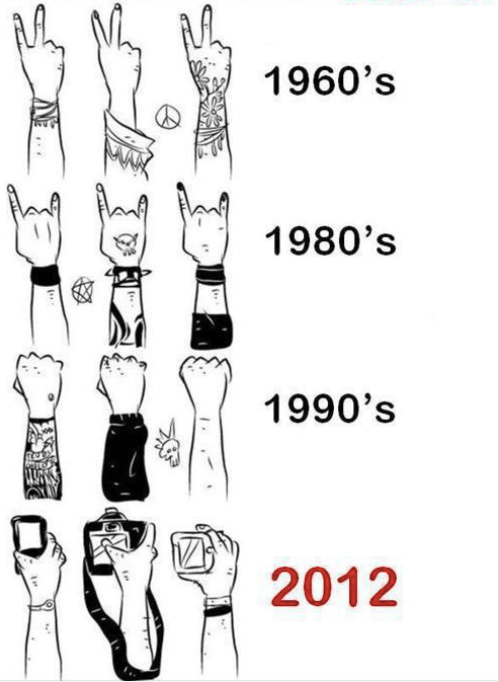
Original Media:
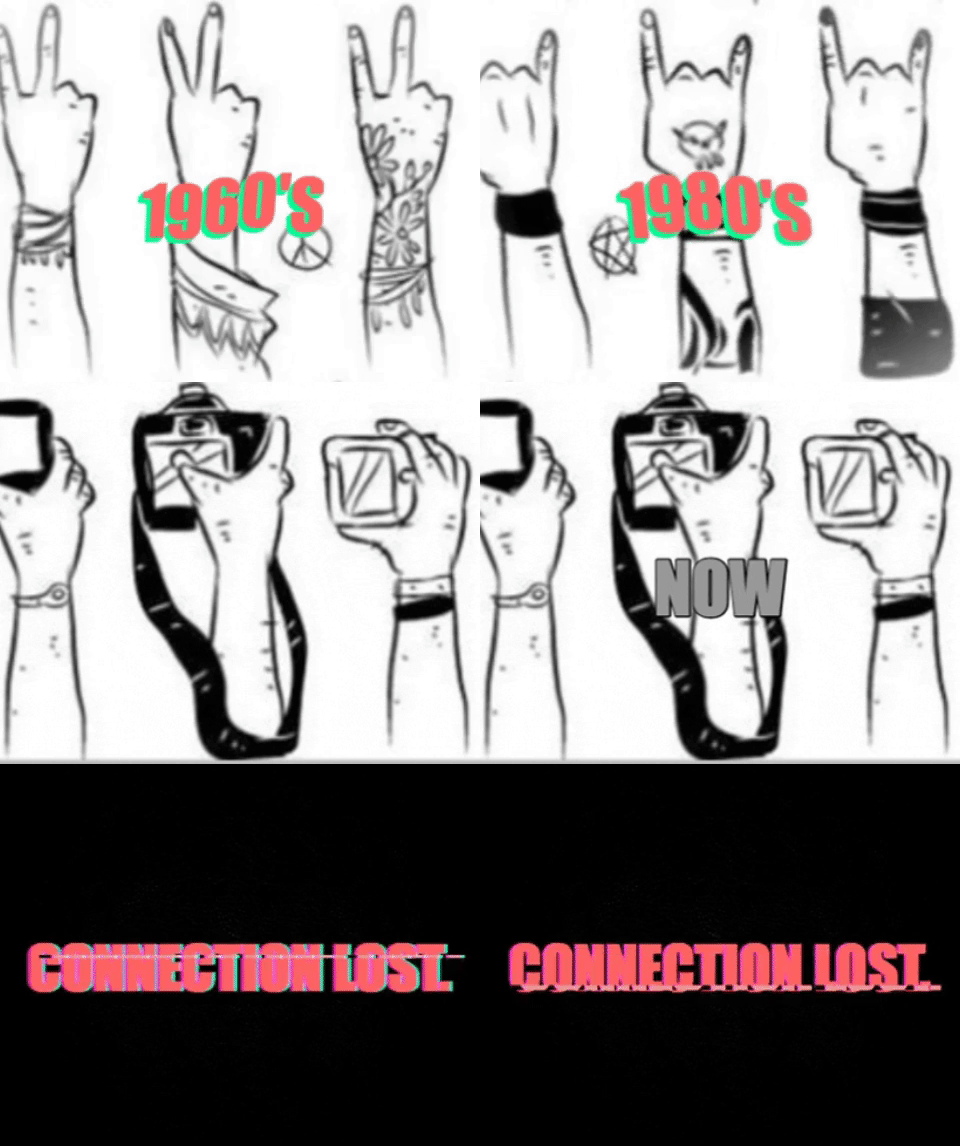
Edited Media:
The Editing Process:
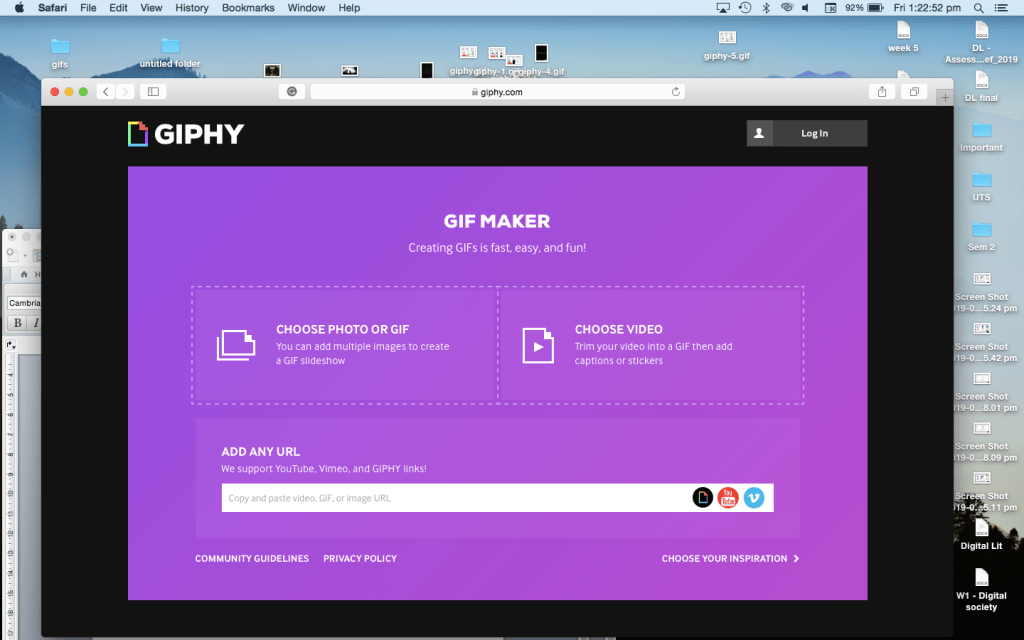
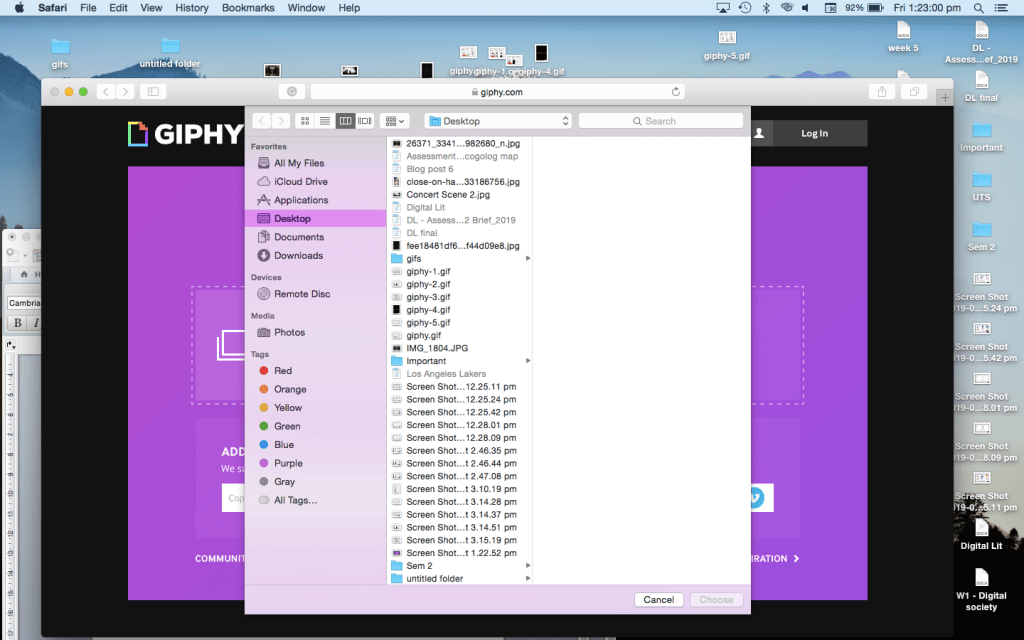
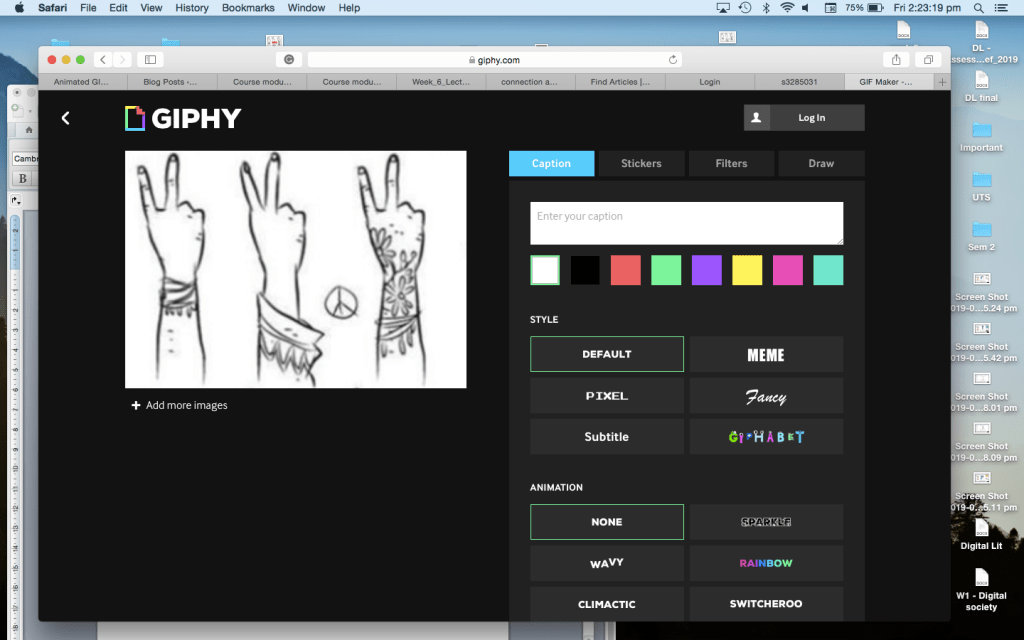
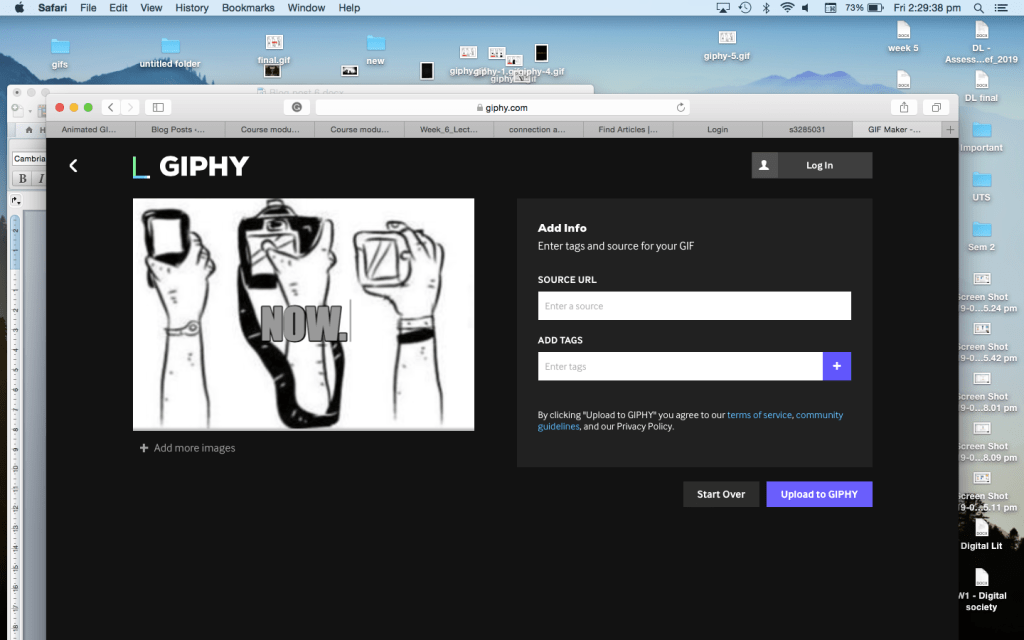
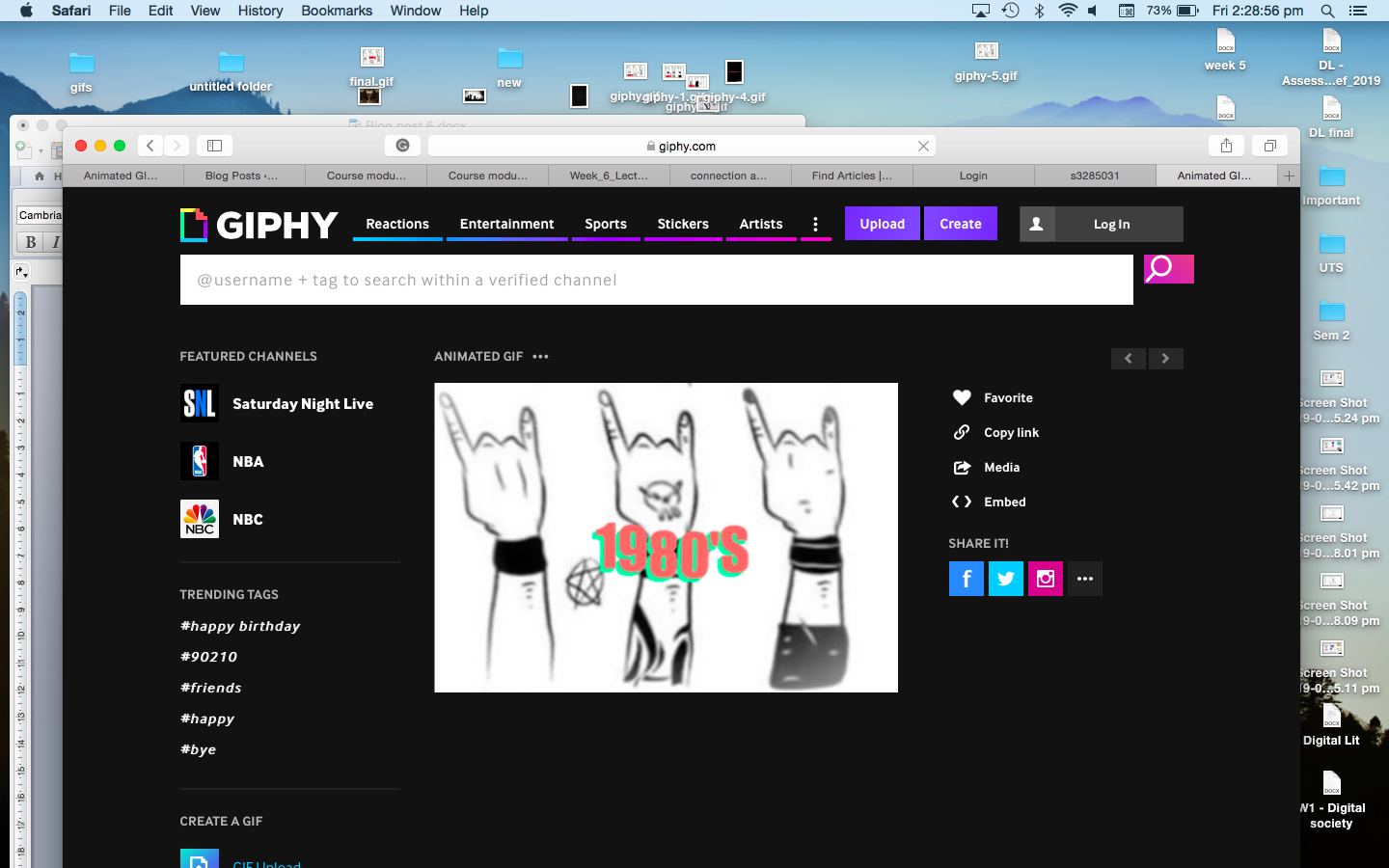
I used the online editing and search engine ‘Giphy’ as my editing tool, which allowed me to cut the original media, arrange the images in a short, soundless looping video and include motion edits and text.
I firstly separated each hand gesture from the original media, uploaded the images separately into the websites ‘Gif Maker’, and used their editing bar to add text and apply a ‘wavey’ filter. I applied a one second time laps to the first three images and a three second laps to the last two, in an attempt to draw the audiences attention to my theme of connection and disconnection.
Reflection:
By creating a short lopping video using ‘Giphy’, I intended to form an overriding theme of connection and disconnection, with a focus on the concept of, ‘digital natives’ and how people are now living their day to day lives immersed in digital technologies (Ng, 2010), rather than being present in the moment. The profound importance technology plays in peoples lives today and its affect on forming a new culture of connectivity and communication is undeniable. Therefore, I attempted to show this change through the simple use of hand gestures, which have now been replaced by mobile phones and cameras. I applied a one second time laps to the pictures to saturate the viewers with constant flashing media in order to highlight the multitasking nature of digital natives and their ability to rapidly process information and media. However, I specifically reduced the speed on the last image of the figures holding technology to symbolise the power it has to disconnect individuals rather then connect. The gif also focuses on affect which, reminds us to consider how we feel when we consume/engage with media and how we experience and embody it into our lives.
References:
‘Giphy’, 2013, viewed 9 August 2019, < https://giphy.com>.
Ng, W. 2012, ‘Can we teach digital natives digital literacy?’, computers and education, pp. 1065-10678.
‘Remember when people held up lighters, instead of cell phones at concerts?’, Facebook, 2010, viewed 9 August 2019, <https://www.facebook.com/334128223292/photos/rpp.334128223292/334133023292/?type=3&theater>.
 Getting smart with: 3297858